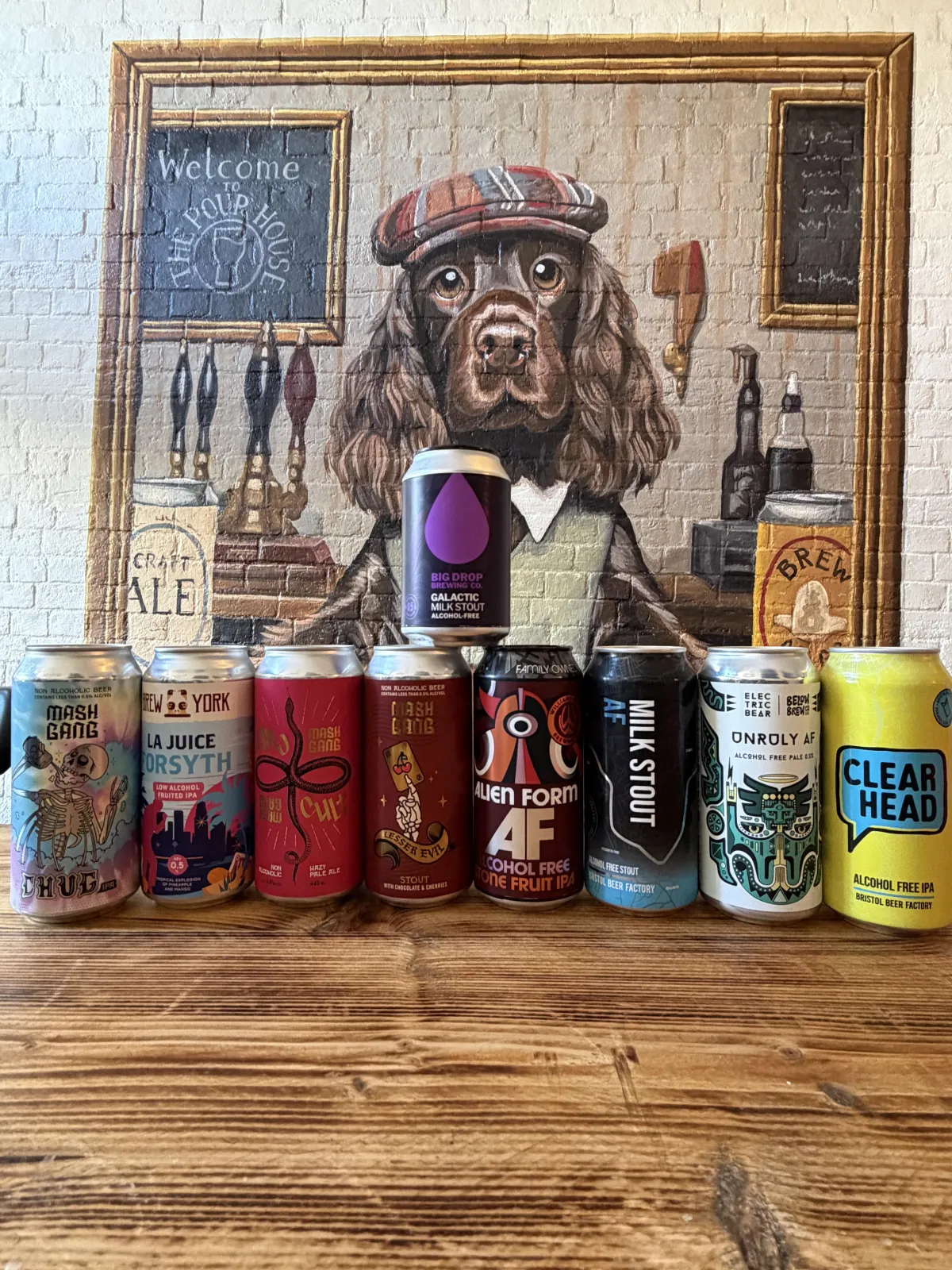
Low, No and Mid-Strength Beers: What’s Changed (and What’s Actually Good Now)
Not that long ago, low and no-alcohol beer had a reputation.
Flat. Thin. Slightly disappointing. Something you ordered because you had to, not because you wanted to.
It felt like compromise in a glass.
Fast forward a few years, and that picture has changed dramatically.
Low, no and mid-strength beers are no longer afterthoughts. They’re intentional. They’re designed properly. And in many cases, they’re genuinely good.
So what’s changed? And how do you know what’s actually worth drinking?
Let’s talk it through — calmly, clearly, and without pretending every alcohol-free beer is revolutionary.
First: What Do We Actually Mean?
Before we go further, it helps to separate the categories.
Low alcohol: Usually around 0.5% ABV or slightly higher
No alcohol: Typically 0.0% ABV
Mid-strength: Lower alcohol than standard beers, often around 2–4%, sometimes called table beer
They aren’t the same thing. And they’re not all trying to do the same job.
Low and no-alcohol beers aim to replicate the flavour experience of regular beer without the alcohol.
Mid-strength beers are still “normal” beer, just lighter in alcohol, often lighter in body too.
Understanding that difference matters.
Why Low and No Used to Be Poor
Let’s be honest about history.
For a long time, alcohol-free beer was treated like a technical problem rather than a flavour challenge.
The focus was on removing alcohol not on preserving character.
That often resulted in beer that felt:
Thin
Slightly sweet
Missing depth
Flat in finish
Brewers were working with limited tools. And consumers didn’t expect much, so the bar stayed low.
It became something you tolerated.
What’s Changed in the Last Few Years
Two big things happened.
1. Technology Improved
Brewers now have far better methods for removing alcohol while preserving flavour. That means the structure of the beer - the body, the balance, the aroma - survives the process far better than it used to.
The result?
Low and no-alcohol beers that actually taste like beer.
2. Expectations Rose
Drinkers stopped accepting poor substitutes.
People wanted choice, not compromise.
They wanted:
Something social
Something flavourful
Something that didn’t feel like a second-rate option
Breweries responded.
And they responded well.
Why People Choose Low, No or Mid-Strength Now
It’s not always about abstaining.
Sometimes it’s about:
Driving
Early starts
Sport the next day
Wanting to pace yourself
Having more than one drink without feeling heavy
It’s not a moral statement. It’s not a lifestyle declaration. It’s often just practical.
And the key shift is this:
People want those options to taste good.
Mid-Strength: The Quiet Middle Ground
Mid-strength beer often gets overlooked in conversations about low alcohol.
But it’s one of the most useful categories.
Mid-strength beer is still brewed normally. Nothing is removed. It’s just designed to sit at a lower alcohol level from the start.
That often means:
Lighter body
Cleaner finish
Easier drinking
It can feel refreshing without being bland.
For many people, mid-strength offers the best of both worlds:
Real beer flavour
Slower pace
It’s not compromise. It’s calibration.
What Makes a Good Low or No-Alcohol Beer?
The same things that make any beer good:
Balance
Body
Clean finish
Aroma
If a low-alcohol beer tastes watery or overly sweet, that’s not because it’s alcohol-free — it’s because it’s poorly balanced.
The better versions feel:
Structured
Intentionally brewed
Rounded rather than hollow
You shouldn’t feel like something’s missing.
The Body Problem
One of the biggest challenges in low-alcohol beer is body.
Alcohol contributes warmth and weight. When it’s removed, that structure can disappear.
The better modern versions compensate through:
Careful grain selection
Controlled fermentation
Thoughtful recipe design
That’s why some alcohol-free beers now feel surprisingly full compared to older versions.
They’re built differently from the start.
The Sweetness Trap
Another common issue is sweetness.
When fermentation is limited or alcohol is removed, residual sugars can linger. That can make beer taste slightly sweet or unfinished.
Good low-alcohol beer manages sweetness carefully.
It should finish clean not cling to the palate.
If it feels sticky or overly sweet, that’s usually a design flaw, not a category flaw.
The Psychological Shift
There’s also something cultural happening.
Ordering low or no used to feel like stepping outside the social norm.
Now it doesn’t.
It’s become normal to see someone alternate:
A full-strength beer
A low-alcohol option
A soft drink
Back to beer
There’s less assumption attached to the choice.
That freedom makes it easier to choose what you actually want.
When Low or Mid-Strength Makes Sense
There are moments where lower alcohol genuinely enhances the experience.
Long afternoons
Hot weather
Early evenings
Social events where you want to stay sharp
It allows you to enjoy the ritual of beer without the intensity.
And that’s often exactly what people are looking for.
Are They As Good As Full-Strength Beer?
Sometimes yes. Sometimes no.
It depends on:
The brewery
The recipe
The style
But the gap has narrowed dramatically.
There are low and mid-strength beers now that stand comfortably alongside standard strength versions.
Not as substitutes.
As legitimate choices.
How to Choose Well
If you’re exploring low, no or mid-strength beer, here’s what helps:
Ask what’s popular
Ask what’s well-balanced
Avoid anything described only as “light”
Look for flavour notes rather than alcohol content
You’re still choosing beer based on taste, not percentage.
The Bottom Line
Low, no and mid-strength beer isn’t what it used to be.
It’s better designed.
Better balanced.
Better understood.
It’s no longer about what’s missing.
It’s about what fits the moment.
And sometimes, the right beer isn’t the strongest one on the board.
It’s the one that works for you — today.