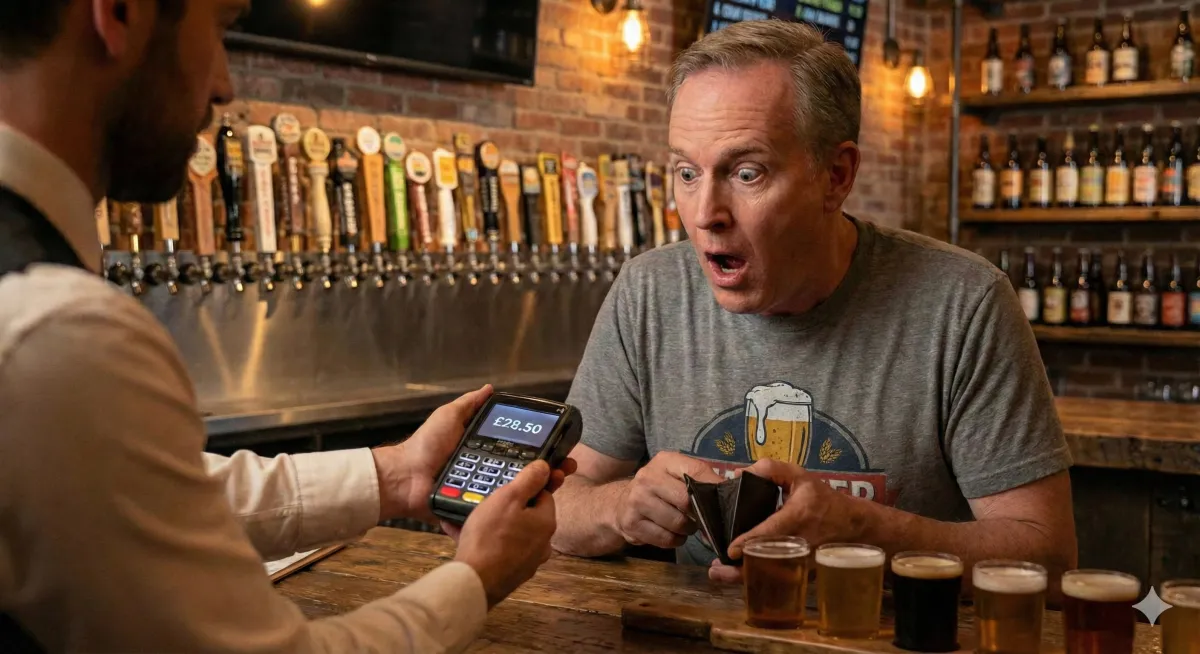
Why Beer Pricing Causes Outrage Yet Coffee Doesn’t
Walk into almost any town in the UK and you’ll see it play out every day.
Someone orders a flat white and a slice of cake.
They tap their card.
No comment. No sharp intake of breath. No muttering.
But put a pint on the bar, a good one, and suddenly the maths starts.
In fact, its all over social media at the moment
"How much?"
“Six/seven quid for a pint?”
“That’s a bit steep, isn’t it?”
“I can get this cheaper in the supermarket.”
What’s interesting isn’t the number on the till. It’s the reaction.
Because when you stop and actually compare the two, beer and coffee aren’t a million miles apart at all.
So why does one feel normal… and the other feel like daylight robbery?
This isn’t a rant.
And it’s not a lecture.
You’re allowed to choose what you spend your money on.
Always.
But it is worth talking honestly about why beer pricing causes such strong reactions — especially when coffee, cake and plenty of other everyday treats don’t.
Coffee, Cake and Quiet Acceptance
A decent coffee in the UK will usually cost somewhere between £3.50 and £4.50. Add cake and you’re often nudging a tenner without really trying.
Most of us don’t bat an eyelid.
We understand, instinctively, that we’re not just paying for beans, milk and hot water.
We’re paying for the whole picture. The equipment. The training. The space. The staff. The heating that’s on even when it’s quiet. The fact that someone else has done the work so we can sit down and enjoy it.
Coffee has changed over the last couple of decades. It’s gone from being something you drink at home to something you go out for. We’ve learned the language. We’ve learned the value. We’ve accepted the price.
Beer, somehow, hasn’t quite had the same cultural shift.
Why Beer Still Gets Judged Differently
Beer looks simple.
That’s part of the problem.
A pint arrives looking… well, like a pint.
No latte art. No branded cup. No explanation required. It doesn’t shout about what went into it.
But behind that glass is a lot more than people realise.
That beer has taken weeks, sometimes months, to make. It’s been brewed, fermented, conditioned, transported, stored cold and looked after carefully before it ever reaches the bar.
Alcohol duty has already been paid on it. It needs specialist equipment to serve properly. It has to be kept clean, fresh and at the right temperature.
And once it’s on tap, it has a shelf life.
If it sells, great.
If it doesn’t, the bar carries the loss - often significant.
Unlike coffee, which can be adjusted day by day, hour by hour, customer by customer - beer requires commitment up front.
You’re backing that beer and hoping customers will love it as much as you do.
“But I Can Get It Cheaper in the Supermarket”
This one comes up a lot.
And on the surface, it makes sense. You can buy beer cheaper in the supermarket. Just like you can buy instant coffee cheaper than a café flat white.
But we don’t really compare those two things — because we know they’re not the same experience.
A well-kept draft beer in a good bar isn’t trying to compete with supermarket pricing.
It’s offering something different: freshness, choice, atmosphere and care.
They’re different products, sold in different places, for different reasons.
There’s Skill in Beer Too
There’s a lot of respect now, rightly so, for good coffee and the people who make it. We recognise the skill involved.
Beer often gets overlooked here.
Looking after a cellar properly takes time and knowledge. Lines need regular cleaning. Stock needs rotating. Different beers need different handling. Temperatures matter. Glassware matters.
When it’s done well, you barely notice.
When it’s done badly, you notice immediately.
Good bars invest in standards you never see, so you can enjoy something you don’t have to think about.
Why Beer Pricing Feels Emotional
Beer has always been tied to value. To affordability. To “a quick one”.
Supermarkets selling crates at rock-bottom prices haven’t helped. Neither has the idea that pubs should somehow absorb rising costs without passing anything on.
But the reality is that running a pub or bar in the UK has become significantly more expensive.
Energy, staffing, rent, duty, stock — it all adds up.
Most independent bars aren’t charging more because they want to.
They’re doing it because staying still isn’t an option.
What You’re Actually Paying For
When you buy a pint, you’re not just paying for the liquid in the glass.
You’re paying for:
Choice and rotation
Quality and consistency
A warm, welcoming space
Somewhere to meet people
Somewhere to exist that isn’t home or work
Just like coffee shops, pubs are social spaces. And social spaces cost money to run properly.
So Is a £6/£7+ Pint Worth It?
That’s entirely up to you.
Not every beer will feel worth it to every person. And that’s fine. Choice matters.
But when beer pricing causes outrage, it’s usually because we’re comparing the wrong things.
When you compare beer to coffee and cake honestly, taking into account time, skill, tax, risk and experience the gap isn’t nearly as dramatic as it first appears.
The Bottom Line
Coffee taught us how to value quality and experience.
Beer is still catching up.
A well-priced pint isn’t a rip-off and there are always cheaper beers available - cask beer is usually cheaper than keg beer.
It’s a reflection of what it takes to do beer properly — from brewery to bar.
At The Pour House, we believe in transparency, fairness and doing things right. Try before you buy. Ask questions. Drink what you enjoy. Skip what you don’t.
No outrage required.
Just good beer, poured properly.